
E-2 Visa and 1031 Exchange: What Every Real Estate Investor Must Know Before Selling
The 1031 Exchange is one of the most powerful tax tools in American law. For a foreign investor under an E-2 visa, it represents a significant opportunity - but also a legal minefield if misused. Here is what you must absolutely understand before utilizing it.
What is a 1031 Exchange?
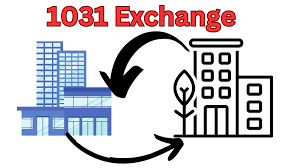
The 1031 Exchange takes its name from Section 1031 of the U.S. Internal Revenue Code. It allows an investor to sell an investment property and defer capital gains taxes, provided the proceeds are reinvested into a "like-kind" property within strict timeframes.
Ex: you sell a property with a $200,000 capital gain. Without a 1031, you pay taxes immediately. With a 1031, you reinvest that $200,000 into a new property - the tax is deferred, potentially indefinitely if you continue to exchange.
The Fundamental Rules:
45 days after the sale to identify the replacement property.
180 days to finalize the acquisition.
Qualified Intermediary: Funds must pass through a third-party intermediary; they can never touch your personal bank account.
Business Use: Both properties must be held for investment or business purposes.
E-2 and 1031 Exchange: The Central Question of "At-Risk" Capital
The E-2 visa requires that invested capital be substantial, at-risk, and committed to an active enterprise. A 1031 Exchange moves this capital from one asset to another, creating a real tension that raises three key questions:
Is the capital still "at risk"? Generally, yes. A 1031 defers tax; it does not neutralize investment risk. This point usually works in the investor's favor.
Is the traceability of funds preserved? This is the most delicate point. Your initial E-2 petition documented a specific investment. If you sell and reinvest via a 1031, you must rigorously document the continuity of the E-2 investment - otherwise, USCIS may consider the initial capital withdrawn from the enterprise.
Does the activity remain active? If the new property generates only passive rental income, you fall back into the "passive investment" trap. The active nature of the business must be maintained throughout the exchange.
Practical Steps to Take
Inform Your Immigration Attorney Before the Sale
Legal sequences and documentation must be coordinated between your tax professional (CPA) and your immigration attorney. These two worlds rarely communicate; it is your role to ensure they are in dialogue.
Document the Continuity of the E-2 Investment
The new property must fit the same active business logic as the previous one. If your E-2 was based on a renovation company, the property acquired via the 1031 must continue to serve that activity—not become a passive yield asset.
Anticipate the Renewal
A 1031 Exchange performed shortly before your E-2 renewal will be heavily scrutinized. USCIS will want to verify that the substantial investment is still present and that the business remains active.
The Bottom Line
In summary, the 1031 Exchange is a legal, powerful tool that is perfectly compatible with an E-2 structure—provided it is used methodically. It does not jeopardize the E-2 investment itself, but it modifies its boundaries, and this change must be meticulously documented and anticipated. Ensure your immigration attorney and your CPA are in dialogue before every exchange. This is the price of peace of mind. The Deltin Law Firm specializes in harmonizing these complex financial moves with your immigration status to secure your long-term success in the United States.



Comments